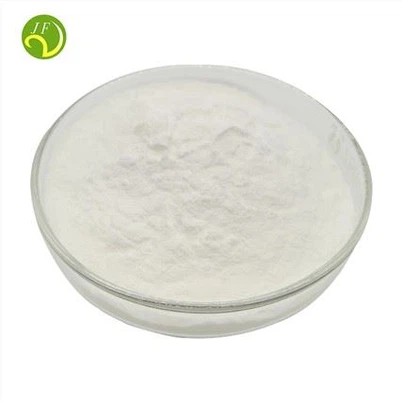
Anti-aging King Bosein: Constantly Upgrading Top-notch Technology
Leave a message
Do you want to stay young forever? Do you want to look young? I believe that the appearance anxiety of every beauty lover comes more or less from skin aging. Anti-aging is a key skin care issue for women all over the world. Today I will talk to you about the anti-aging star: Bosein.
Boseine (Pro-Xylane) is a glycoprotein mixture with anti-aging properties. As the "star of the family" of L'Oreal Group, Bose is loved by consumers all over the world. Some people say that it is this active ingredient that has created a beauty empire. The biggest advantage of Bosein is that it integrates anti-aging and repairing, can effectively increase the water content of the skin, and is mild in nature, suitable for sensitive skin. It can exert biological effects at different levels of the skin. Promote the synthesis of mucopolysaccharides (GAGs) in the skin, increase the production of dermal collagen, and achieve the effect of dermal repair and wrinkle reduction.

Bose-Einstein condensate (BEC) is a unique state of matter that occurs at extremely low temperatures, near absolute zero. It was first predicted by Albert Einstein and Satyendra Nath Bose in the 1920s. This condensate represents a fundamental breakthrough in the field of quantum physics and has opened up new avenues for scientific research.
Theoretical Foundation:
The concept of Bose-Einstein condensate originated from the work of Bose and Einstein. In 1924, Bose sent his research on quantum statistics to Einstein, who recognized the importance of Bose's ideas. Einstein extended Bose's work and published a paper in 1925, laying the theoretical foundation for the condensation phenomenon in a gas of non-interacting bosons.
Technological Advances:
Despite the theoretical predictions, experimental verification of Bose-Einstein condensation remained a challenge for several decades. The main obstacle was the requirement of extremely low temperatures, close to absolute zero. Over the years, advancements in cryogenics and laser cooling techniques played a crucial role in achieving the necessary conditions for the formation of a BEC.
Path to the First BEC:
In the 1970s and 1980s, scientists made significant progress in achieving lower temperatures and trapping atoms using magnetic fields and lasers. In 1995, Eric Cornell and Carl Wieman, working at the Joint Institute for Laboratory Astrophysics (JILA) in Boulder, Colorado, successfully created the first Bose-Einstein condensate using a cloud of rubidium-87 atoms. Shortly after, a similar achievement was reported by the research group led by Wolfgang Ketterle at MIT.
Key Experimental Techniques:
The breakthrough experiments utilized a combination of laser cooling, evaporative cooling, and magnetic trapping techniques. Laser cooling involves using laser beams to slow down and cool the atoms. Evaporative cooling, on the other hand, is a process of selectively removing the high-energy atoms from the trapped sample, which causes the remaining atoms to cool and condense. Magnetic trapping involves using magnetic fields to confine the atoms.
Properties and Phenomena:
Bose-Einstein condensates exhibit several unique properties and phenomena. One such phenomenon is superfluidity, where the condensate flows without any resistance. This behavior is attributed to the fact that all the atoms in the condensate occupy the same quantum state, allowing for coherent flow. Another significant property is the ability to create interference patterns, similar to those observed in wave-like phenomena.
Expansion of Research:
Following the groundbreaking achievements, research on Bose-Einstein condensates expanded rapidly. Scientists began studying the dynamics, stability, and behavior of condensates in different experimental setups. They explored various atomic species and developed new techniques to manipulate and control condensates. This research led to a deeper understanding of quantum phenomena and opened up possibilities for practical applications in fields such as atomic clocks, precision measurements, and quantum computing.
Nobel Prize Recognition:
In 2001, Eric Cornell, Wolfgang Ketterle, and Carl Wieman were awarded the Nobel Prize in Physics for their groundbreaking achievements in the creation of Bose-Einstein condensates. The prize highlighted the significance of their work and its impact on the field of quantum physics.
Further Advancements:
Since the initial discoveries, scientists have continued to push the boundaries of Bose-Einstein condensate research.